Making Comics with an AI Collaborator
A bunch of friends from work and I were running the Wild Beyond the Witchlight D&D campaign. The hook of that adventure is that every character starts cursed in some strange way, and the curses are real inconvenient. One of us lost his ability to focus and was constantly distracted by anything that sparkled. My character lost his sense of direction; north was wherever I happened to be facing. Another lost his sense of self-preservation entirely.
The campaign became, week over week, a parade of unforced errors. One of us was convinced he could fix a hot-air balloon mid-flight and managed to make it worse before falling off. The self-preservation-impaired monk spent the moments immediately after a successful parley trying to intimidate an overwhelmingly larger force of bandits. Most sessions ended with someone laughing hard enough to pause the game.
As the scribe of the group, I'd been writing meeting notes after every session. Meeting notes were a wildly inadequate medium for the material. The comedy of our adventures was a visual storytelling problem.
The other thing about me: I read comics all through high school and college. Batman, Superman, Wolverine, the X-Men crossovers that came out twice a year and contradicted themselves on the second issue. I mostly gave them up as I got older, selling the long boxes off in two rounds: first to buy Magic cards, then years later to buy a 3D printer. The Iron Man movie reawakened my love of comics as an artform. It also did something else, and I know a lot of you feel the same way. It made me want Jarvis.
Not the suit. Jarvis. A partner that knows what I'm working on, argues back when I'm being lazy, and disappears when I'm cooking. Not the kind that nods along to whatever I throw at it, and not the kind I hand prompts to and walk away from.
So I built a tool where every action flows through an agent I can talk to before, during, and after each step. There are still buttons in the interface, but they're conversation starters, not direct actions. A button labelled "Render panel" doesn't call a render function — it drops the same prompt I'd have typed into the chat, and the agent picks it up from there.
Then I wanted to see if I could make our cursed D&D party look as ridiculous as it deserved.
Comic Studio is that experiment. It's where the Witchlight party finally gets the visual treatment it earned.
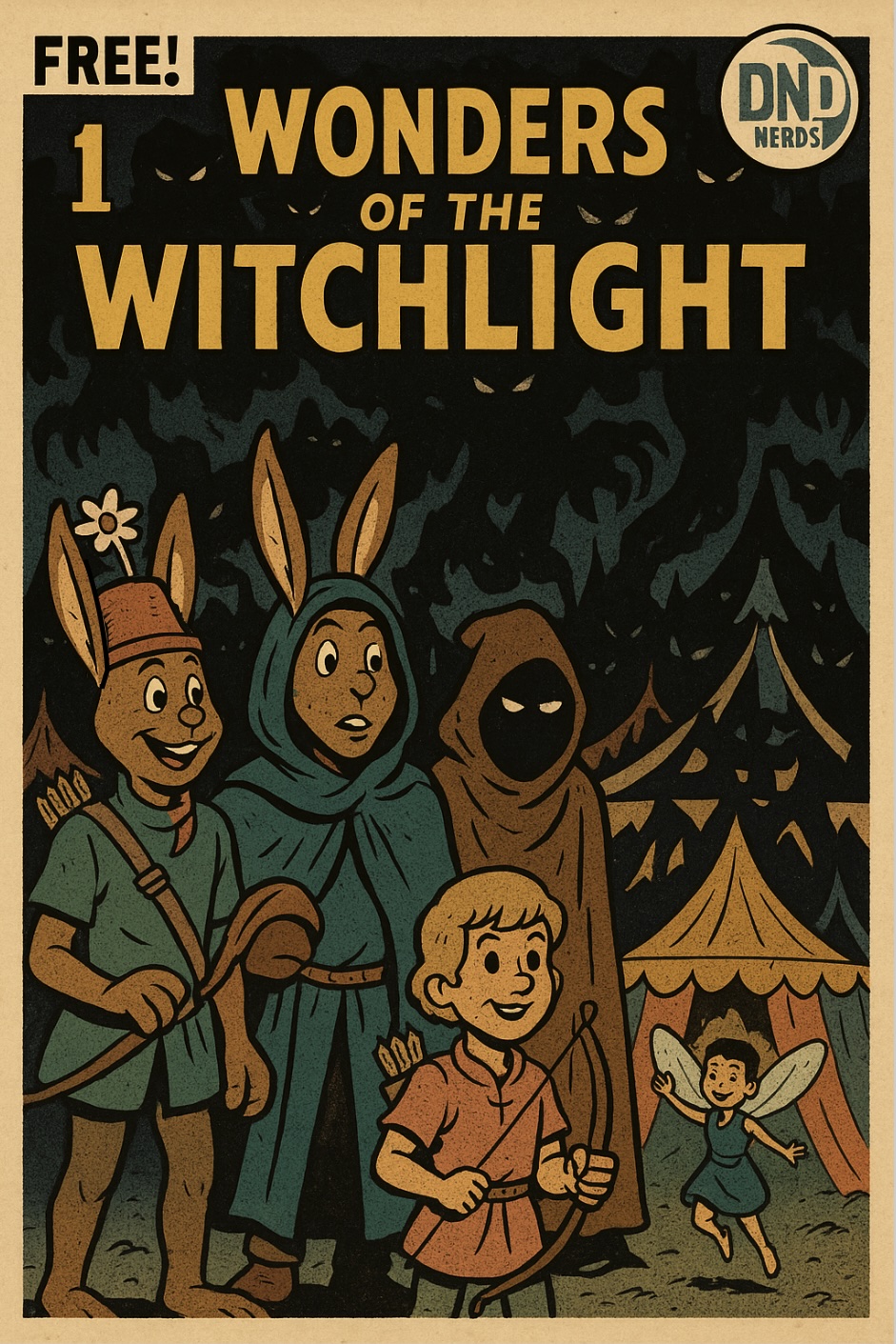
What it looks like
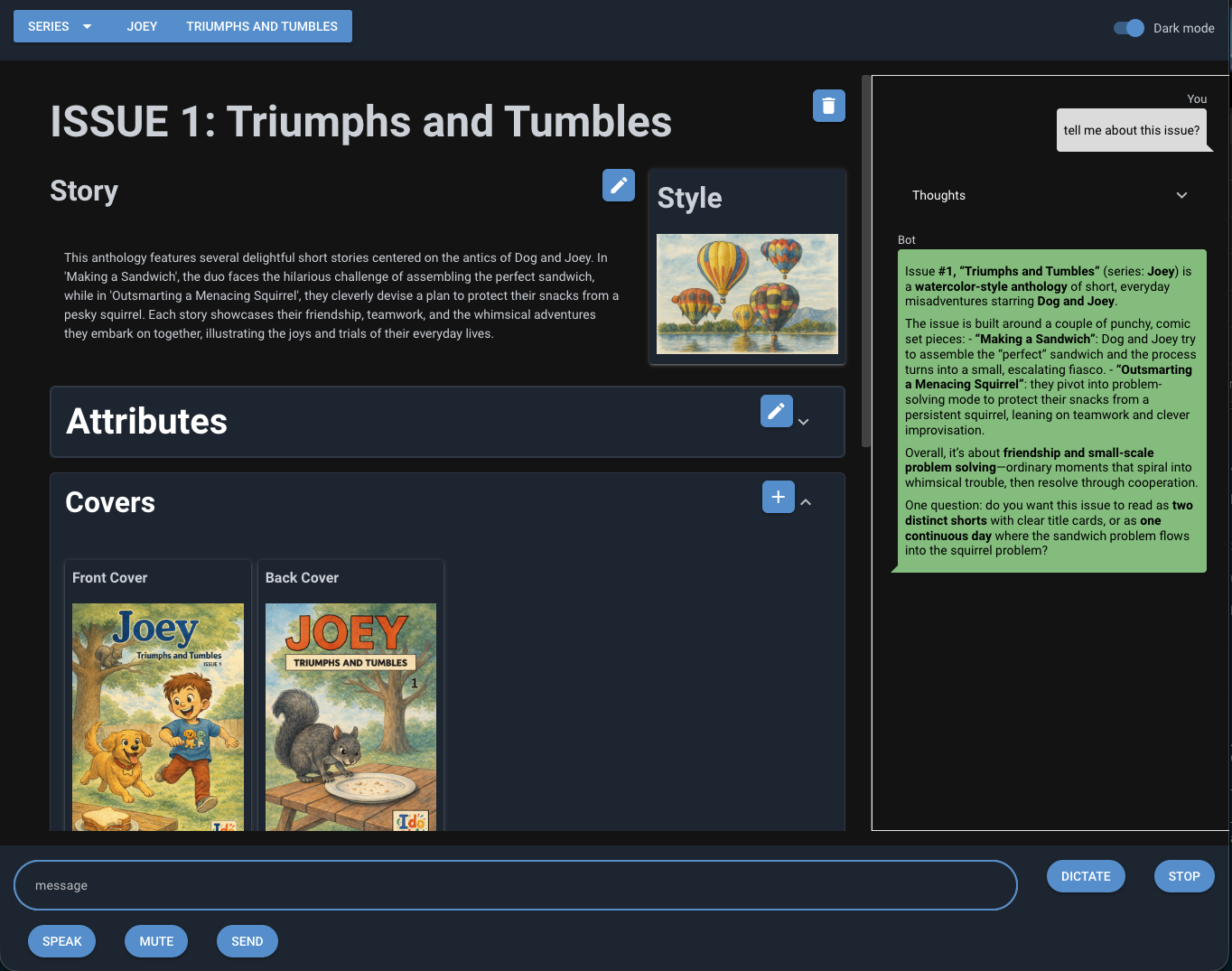
The same kind of dialog runs through the project hierarchy.
Pick a character variant and say "give him a green cloak instead of a brown one." The agent comes back with questions: only this variant or all of them? Re-render the existing reference images, or just update the attire description for future panels? Half the time those questions surface a decision I hadn't actually made.
Select a region of an image and say "this part should look more like a flowerpot." It asks: keep the current shape and just change the texture, or replace the whole shape? Visible flower above the rim, or just leaves? More than once I've realised mid-answer that I want something different than what I first asked for.
The image generation at the end is the part I've delegated. The conversation is where the work happens.
Things I didn't expect
Drift comes in flavors
The first surprise was how many distinct kinds of drift show up once you start generating panels in series, and how each one wants a different fix.
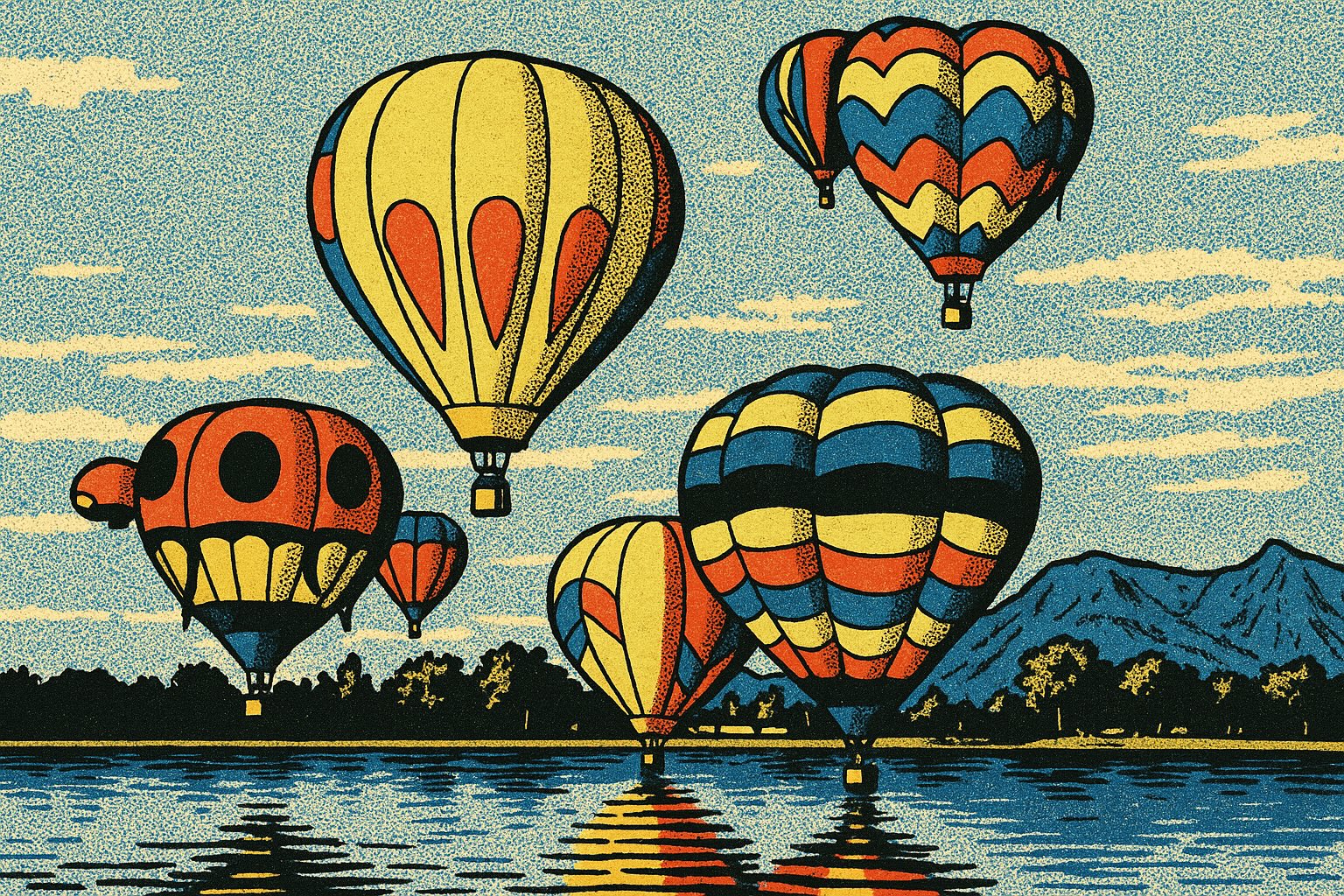
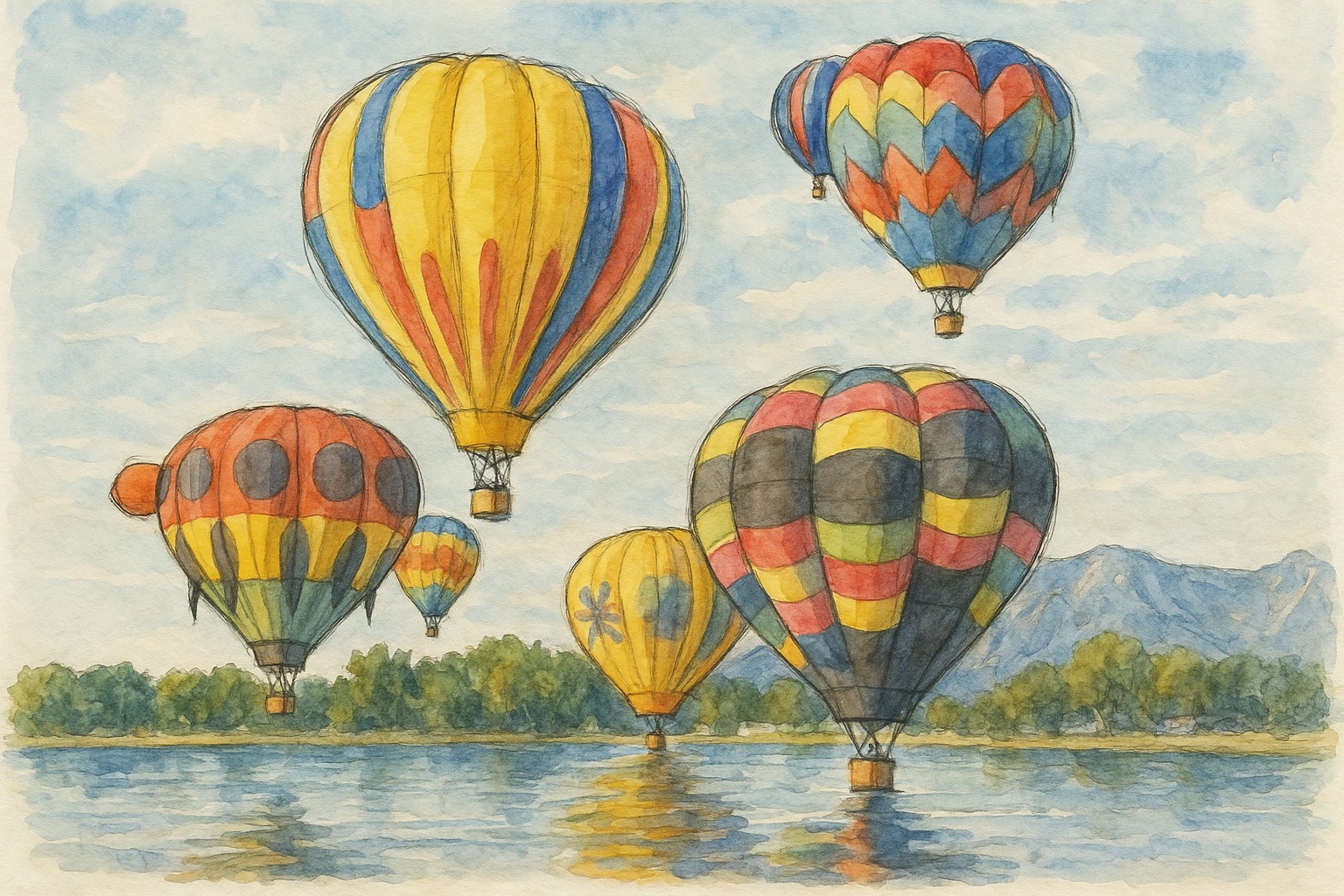
Style drift was the first. Run the same prompt twice and you get two different linework weights and two different colour palettes. The fix is a structured style sheet for the series, with reference images for both the art style and the dialog style. Once that's locked in and fed into every render, the look stays put. The reference images aren't always required (the structured style fields alone usually carry the look), but with the references attached the look stops drifting.
Here's the same prompt (hot air balloons over a lake with mountains behind) rendered through three different style sheets:

Character drift gets the same treatment: a structured representation per character plus a multi-angle reference sheet. That helps, but the cracks show in the details. Hat colour shifts panel to panel. A scarf reappears as a pendant. Minor accessories migrate. Brassic's reference sheet (below) carries his core identity reliably, but the agent will still occasionally render him with a slightly different beard fringe than the sheet shows.
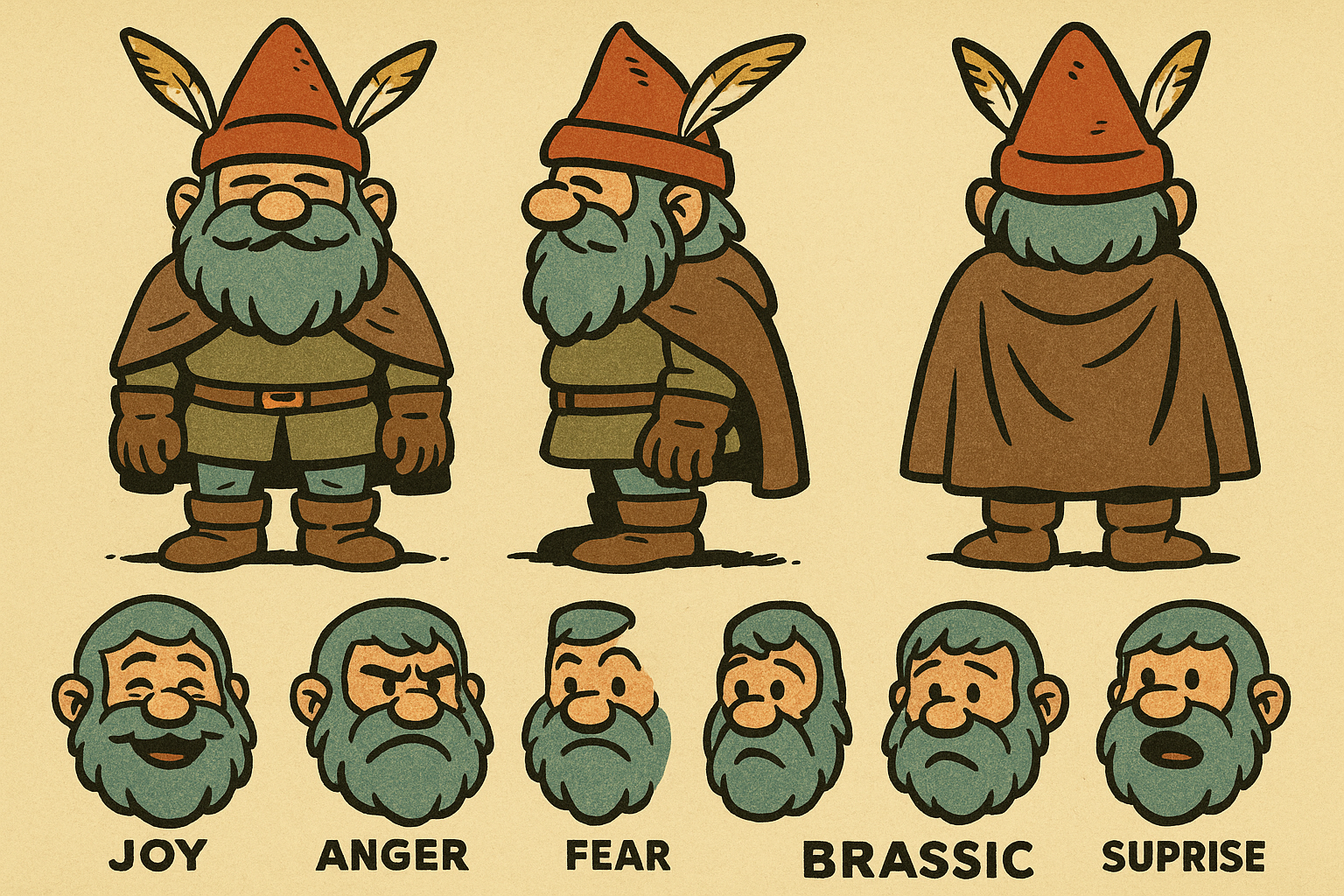
Scene drift is the one I haven't solved. Backgrounds don't have reference images yet. They get generated fresh per panel from the scene's text description, so the carnival tents in panel two might be a slightly different shape than the same carnival tents in panel five. The pattern is reminiscent of how Marvel's Weirdworld would cycle through art teams between pages: you can see the seams in the world even when the figures hold steady. It's on the list.
Most of my budget goes to small details
Text generation is cheap. Image generation is not, and most of my spend has gone to fixing minute details that the prompt-to-image step keeps mangling.
Dargo, one of the party characters, wears a hat that's supposed to look like an upside-down flowerpot with a single flower poking out of it. The agent gets the rest of him right (proportions, robe, posture), but the flowerpot hat keeps either disappearing entirely or being silently swapped for a fez. I've burned more renders trying to keep one piece of headwear consistent than I have on anything else in the comic.
That gap between "what I asked for" and "what came back" is most of what I do when I'm in the workspace: send another instruction, sometimes another reference image, sometimes a region-paint edit, until the small thing finally matches. The reference-sheet machinery helps but doesn't close the gap.
Tuning the agent to be a voice in the room
This took the most work. My canary was an art style where every panel would be entirely black. No characters, no backgrounds. Solid black rectangles for the whole issue.
- Default agent: "What a wonderfully innovative idea — this could push the visual language of comics in exciting new directions!"
- Over-corrected agent: "That would never work."
- Tuned agent: "This is an interesting idea. How do you imagine using it for visual storytelling? Are you going for tension and absence, or something more conceptual? Where does the dialogue live?"
The third response is what I want: a collaborator that takes a weird idea seriously enough to ask what I actually mean by it. Not a yes-man, and not a gatekeeper either. Getting there took several rounds of system-prompt tuning around being a peer, asking clarifying questions, and pushing back on craft choices when craft was the actual issue.
What's not done
The biggest gap is the storyboarding experience: the workflow that takes a scene idea, breaks it into a beatboard, and generates panels from each beat. That's the heart of what a comics tool ought to do, and it isn't there yet. The agent doesn't understand the visual-storytelling medium well enough to help with this part. It packs too much action into each panel: multiple characters mid-motion, three lines of dialogue, a major plot beat, where a real comics page would want one beat per panel and let the next panel breathe. Building this layer is the next thing I want to work on.
Without it, I've been generating assets one at a time and assembling each issue manually in a Google Doc, cutting panel images in, arranging them on pages, drawing text bubbles around them. The cover, character, style, and individual-panel generation all work. The comic-making workflow that sits on top of those assets is still me with a clipboard.
There's a longer list of smaller gaps I already know about, and I'll no doubt find more as I keep using the thing.
A toy with a real idea in it
Comic Studio is a toy. An experiment. A flight of fancy I built to scratch a specific itch (the Witchlight comic) and to find out what the dialog-first pattern actually felt like in a creative tool.
It's not Jarvis. More like Lefty, the clumsy robotic arm Tony keeps in the corner of the workshop for comic relief. The one that fires the extinguisher when there's no fire and stares back at Tony, dejected. Occasionally brilliant, regularly off-target. The hat doesn't always look like a flowerpot. The carnival tents change shape between panels. The agent will hand me back a brilliant scene transition and then in the next breath ask me to clarify what a "scene" is.
The pattern works. Every action routes through an agent that knows the project state, every image prompt is conditioned on structured data and reference sheets, and the agent voice is tuned past sycophancy. With those three pieces in place, I finally started making the comic.
The first issue of Wonders of the Witchlight, the comic that came out of all this, is here as a PDF: Wonders of the Witchlight #1. The art is rough in places, but it catches the spirit of the campaign in a way meeting notes never did.
Try it
The code is on GitHub. You'll need an OpenAI API key and a willingness to spend a few dollars on image generation. Bring a comic idea you've never had time to draw. See what happens.
If you find yourself, like me, talking out loud to an empty room about whether the moonlight should be cooler in panel three, then it's working as intended.